Ear and hearing No. 06
Are cotton buds doing more harm than good?
Usually, yes. Earwax is a protection, not dirt. A cotton bud rarely removes it. The bud pushes wax deeper, where it blocks the canal, irritates the skin, and sometimes meets the eardrum. Most ears clean themselves. Clean the outside. If the ear feels blocked, have it looked at instead of digging.
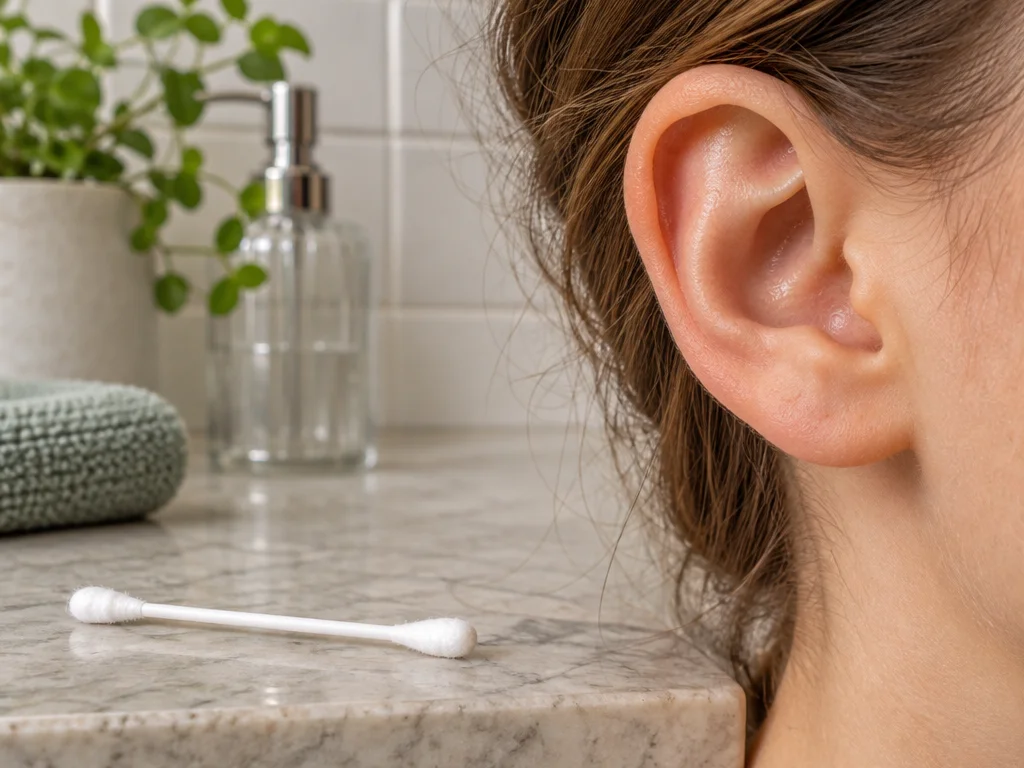
The wax on the cotton bud is not proof you cleaned the ear. It is often proof you pushed the rest of it deeper.
On this page
In short
- Earwax protects the canal. It is not dirt, and most ears clear it themselves.
- A cotton bud usually pushes wax deeper instead of removing it.
- The same gesture can scratch the canal or perforate the eardrum.
- Clean only the outside of the ear.
- A suddenly blocked ear should be examined, not dug out at home.
The bud comes out amber, and the habit feels justified. That smear is a poor trophy. The canal is a cul-de-sac the width of a pencil. Anything rigid you send down it meets the wax before it meets the exit, and the wax moves the only way it can: toward the eardrum.
Earwax is not dirt
Cerumen is made on purpose. It oils the canal, carries dust and debris outward, and is mildly hostile to bacteria. A visible flake at the opening is the system working. The American Academy of Otolaryngology is plain about this: wax that is not causing symptoms, and not blocking the canal, should be left alone. Chasing it is how a normal ear becomes an impacted one.
Impaction is common enough to be ordinary: the academy’s patient guidance cites about one in ten children, one in twenty adults, and a higher share of older people. Hearing-aid users collect it too, because the mould stops the outward march. The symptom list is fullness, dulled hearing, itch, tinnitus, and a cough from the nerve the canal shares with the throat. Pain, discharge and bleeding are not wax’s signature. They need a different explanation.
What a cotton bud actually does
It wipes a little wax off the wall and compacts the rest into a plug against the drum. The plug is why the ear feels more blocked after a thorough clean. The same gesture scratches skin, invites infection of the canal, and can perforate the eardrum. A slip in the bathroom is a classic way to arrive at a perforated eardrum. Keys, hair pins, ear candles and the cap of a pen are the same idea with less cotton. Candling has no good evidence and a real record of burns and injury.
Most ears are already cleaning themselves
Skin in the canal grows outward, like a slow conveyor. Jaw movement from talking and chewing helps. Old wax reaches the opening, dries, and leaves in the shower. You do not see the conveyor. You see the flake, and you misread it as neglect.
Some people make more wax, or drier wax, and the conveyor stalls. They still should not send a bud in to help. Softening drops are an option only if a clinician has said the eardrum is intact and there has been no ear surgery. The earwax guide covers what a clinic removal involves. It is a look, then a careful clear, not a performance.
Clean the outside
The canal does not need a tool.
- Wipe the outer ear with a cloth. That is the cleaning.
- Nothing smaller than a fingertip goes in, and the fingertip does not go in either.
- After a shower, dry the outside and leave the canal alone.
- Skip cotton buds, hair pins, ear candles and pen caps.
If the ear feels blocked, stop digging
A blocked ear might be wax. It might be fluid behind the drum, an infection, or a sudden change in the inner ear. Those can feel identical from the inside. Digging delays the one that is urgent and worsens the one that is wax. Sudden hearing loss can masquerade as a plug. If hearing dropped quickly, especially in one ear, the next step is an examination, ideally the same day, not another bud.
Ear and hearing consultations at Apricity start with that look. If it is wax, it can often be dealt with. If it is not, you will be told what it is instead, which is the result the bud could not give you.
People also ask
The questions that follow this one.
Are cotton buds bad for your ears?
Using them inside the canal is. They push wax deeper, can scratch the skin, and can perforate the eardrum. Wax on the tip is not evidence the ear is cleaner. The American Academy of Otolaryngology advises against putting cotton buds, pins or similar objects into the ear.
Is earwax supposed to be removed?
Only if it is causing symptoms or blocking the view of the eardrum. Wax protects the canal. Most ears move old wax out on their own. Routine digging creates the blockage people are trying to prevent.
How should I clean my ears safely?
Wipe the outer ear with a cloth. Let water from a normal shower do the rest, and dry the outside. Do not insert buds, candles or tools. If wax is blocking the ear, a clinician can remove it, or may suggest drops after checking the eardrum is intact.
Why is my ear more blocked after using a cotton bud?
The bud compacted wax against the eardrum instead of lifting it out. That plug dulls hearing and creates fullness. Further buds make the plug denser. Have it examined rather than repeating the manoeuvre.
Can a cotton bud burst an eardrum?
Yes. A slip is enough to make a hole. Pain, bleeding, discharge or a sudden change in hearing after a bud is a reason to stop and be examined. Do not put drops in until someone has looked.
What if I think it is wax but it might not be?
Fluid, infection and sudden inner-ear hearing loss can all feel like a blocked ear. Pain, discharge and bleeding are not typical of wax alone. A hearing drop that arrived over hours or a few days should be assessed urgently, not irrigated at home.
Sources
- American Academy of Otolaryngology: earwax guideline, and what not to put in the ear
- Harvard Health: why cotton buds are unnecessary and can harm the ear
- AAO-HNS patient handout: ways to reduce earwax, and choices that are not advised
Guidance changes. This page was drafted on 6 November 2026 and is not a record of your examination. For a sudden change, or any trouble breathing, do not wait on an article.