
Ear and hearing No. 03
Can one firecracker damage your hearing?
Yes. One firecracker close to the ear can be loud enough to injure hearing in a moment. Some fireworks reach about 140 to 160 decibels at close range. Ringing afterwards can be a warning, not a party trick. Distance and real hearing protection matter more than bravery, especially for children.
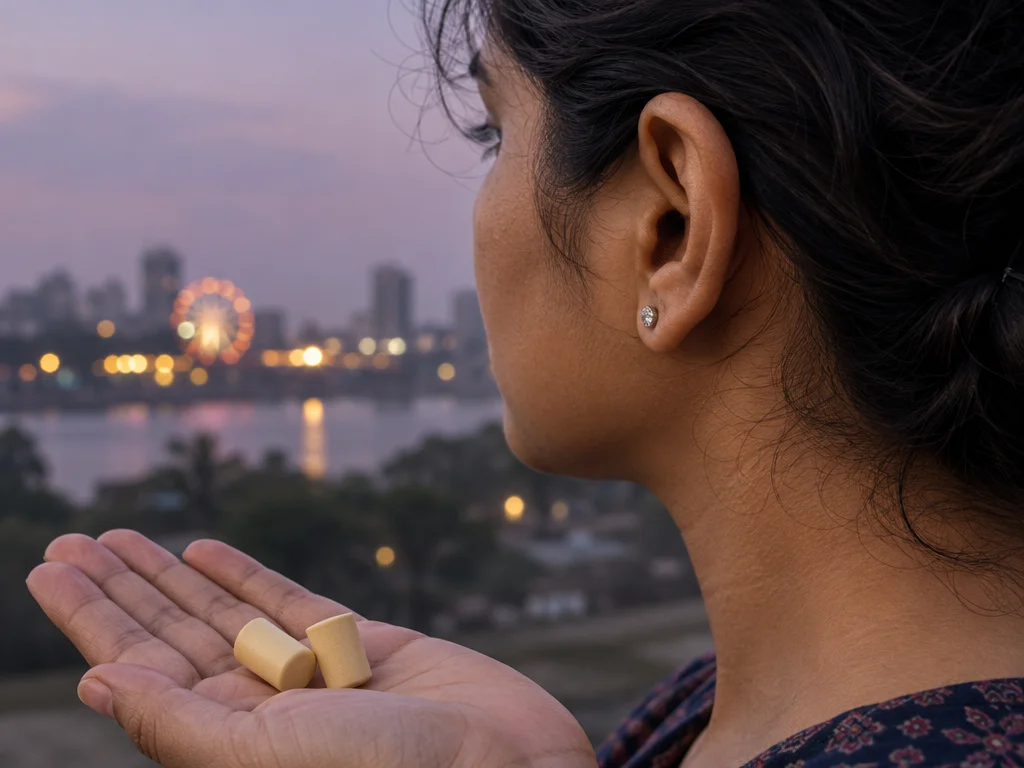
One firecracker exploding close to the ear can permanently damage hearing. Some reach 140 to 160 decibels. Ringing can be the warning.
On this page
In short
- One blast close to the ear can injure hearing in a moment.
- Some fireworks reach about 140 to 160 decibels at close range.
- Ringing afterwards is a warning, even when it later fades.
- Distance matters most. Fitted earplugs help. Cotton wool barely does.
- A sudden drop in hearing should be checked the same day.
This is not a seasonal exaggeration. A firecracker is impulse noise: a blast, not a raised voice. The ear can forgive a loud room for a while. It does not get the same grace from an explosion beside the head. People walk away thinking the ringing is temporary. Sometimes it is. Sometimes it is the first report of an injury.
How loud a firecracker actually is
Ordinary speech sits around 60 to 70 decibels. Prolonged sound around 85 decibels is where workplace rules start to worry about hours of exposure. A firecracker is not that problem. It is a peak. Measured close to the blast, some fireworks reach about 140 to 160 decibels, and figures around 150 decibels a metre from the source are quoted by hearing organisations. Impulse noise above about 140 decibels can injure the inner ear almost at once.
Decibels are not a polite scale. A small step up is a large step in energy. Standing a little nearer is not a little louder. The type of cracker, the distance, and the walls around a courtyard all change the number. There is no single distance that is safe for every cracker in every lane.
What the blast does inside the ear
Sound becomes hearing in a field of hair cells in the cochlea. Those cells do not grow back. A blast can bend or break them. The result may be a dull ear, a missing band of pitches, or a sound that stays after the cracker has not: tinnitus. The same pressure wave can tear the eardrum or disturb the chain of tiny bones behind it. Pain, blood, fluid, or a spinning feeling are reasons to stop guessing.
A muffled ear that recovers over minutes can be a temporary threshold shift. Recovery is not proof that nothing happened. Repeated blasts, or one very close blast, are how a temporary muffling becomes a permanent notch in the hearing. Hearing loss and tinnitus have their own guides. A cracker is one way to arrive at either.
Ringing after a cracker is a warning
Tinnitus after a loud blast means the inner ear was overloaded. It may fade overnight. If it is still there the next day, or if hearing in that ear is down, treat it as an injury to be measured, not a story to tell at lunch. Sudden hearing loss is time-sensitive. The separate guide on sudden hearing loss explains why the first day matters.
How to protect hearing this Diwali
- Distance first. If the blast is uncomfortable, you are too close. Do not lean over a cracker, and do not let one off beside someone’s head.
- Use real hearing protection when you cannot leave the noise: foam earplugs rolled small and held while they expand, or earmuffs that seal. Cotton wool barely reduces the peak.
- Children need a further line and protection that fits. A child will not reliably move away, and a child’s ear is not a tougher version of an adult’s.
- Earplugs are not permission to stand closer. If it is still painfully loud with them in, move.
- Give the ears quiet between bursts. Another hour of speakers after the crackers is more load, not a rest.
What to do if a cracker went off too close
Leave the noise. Do not put oil, drops, cotton buds or water in the ear. If there is blood or fluid, keep the ear dry and do not try to clean it. Pain, dizziness, bleeding, a sudden drop in hearing, or ringing that persists should be examined. For a clear drop in hearing, the same day is the right day. Call the clinic, or go to an emergency department if it is closed. A hearing test shows what the blast took. Waiting to see if it “pops” can spend the window in which some inner-ear injuries are treated.
People also ask
The questions that follow this one.
Can one firecracker cause permanent hearing loss?
It can, if it explodes close to the ear. Impulse noise around 140 decibels and above can injure the inner ear in a fraction of a second. Some of that injury does not recover. Distance is the most reliable protection.
How many decibels is a firecracker?
It depends on the cracker and how close you stand. Close to the blast, some fireworks are measured around 140 to 160 decibels. That is far above conversation, and it is a sudden peak, so the usual advice about hours of exposure does not make it safe.
Is ringing in the ears after Diwali normal?
It is common, and it is still a warning. The inner ear was overloaded. If the ringing fades and hearing feels normal, rest the ears and avoid more noise. If ringing persists, or hearing is dulled, get the ear examined rather than waiting through the week.
Do earplugs work for firecrackers?
Well-fitted foam earplugs or earmuffs reduce the peak and are worth using, especially for children and for anyone who must stay near the noise. They do not make it sensible to stand over a cracker. Cotton wool is a poor substitute.
What should I do if a firecracker burst near my ear?
Move away, keep the ear dry, and do not put oil, drops or cotton buds inside it. Seek urgent care for sudden hearing loss, ringing that stays, pain, bleeding, discharge or dizziness. A sudden drop should be assessed the same day.
Are children more at risk from firecracker noise?
They are less able to judge distance, more likely to be at adult elbow height beside a blast, and dependent on someone else for protection. Keep them further back than the people lighting crackers, and use hearing protection that actually fits.
Sources
- American Speech-Language-Hearing Association: fireworks, decibels, and hearing protection
- StatPearls: acute acoustic trauma from impulse noise above about 140 decibels
- NIDCD: noise-induced hearing loss
Guidance changes. This page was drafted on 6 November 2026 and is not a record of your examination. For a sudden change, or any trouble breathing, do not wait on an article.