Nose and sinus No. 04
The morning after Diwali: smoke, not a hangover
You can wake up hoarse, blocked and sneezing without having had a drink. Firecracker smoke carries fine particles that irritate the lining of the nose and throat. It feels like the start of a cold. Often it is the air you breathed. People with allergies or sinus trouble feel it sooner.
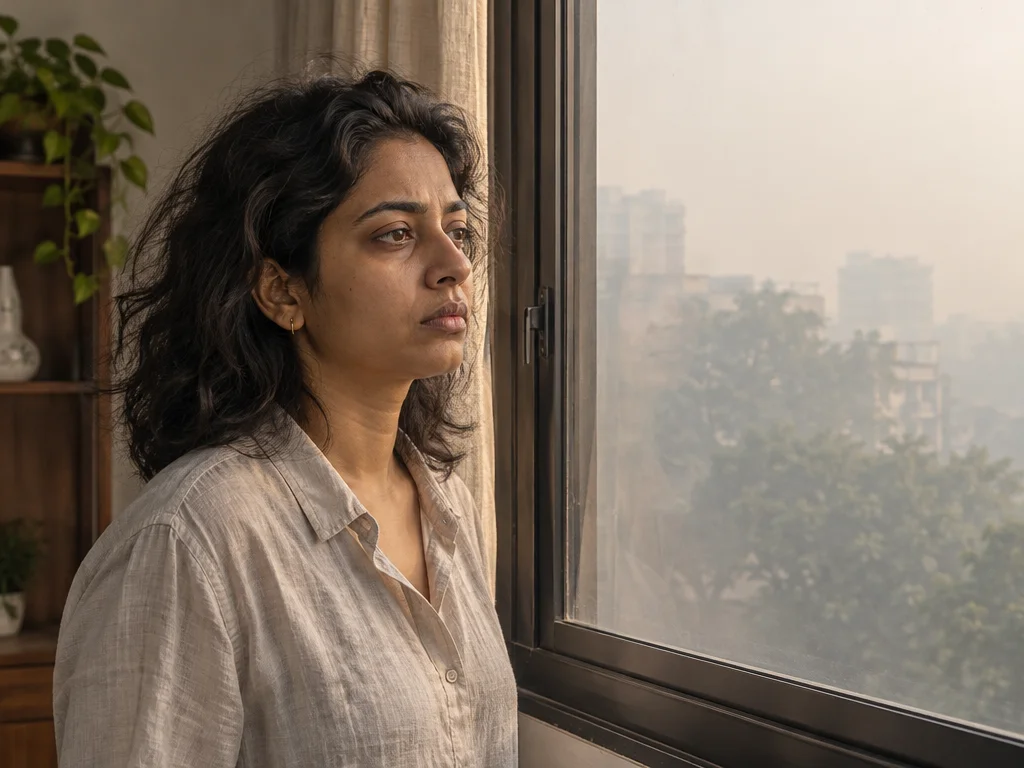
You did not drink. You still woke up scratchy, blocked and sneezing. Sometimes it is not the party. It is what you breathed.
On this page
In short
- A blocked nose and a scratchy throat the morning after Diwali can be smoke, not a cold.
- People who already have allergies or sinus trouble feel the same air sooner.
- Keep windows shut during the worst smoke, and open them once the air has cleared.
- A HEPA purifier lowers particles in a closed room. It does not treat an infection.
- Saline can rinse an irritated nose. Breathlessness or a wheeze needs urgent care.
The morning has a reputation it did not earn. A raw throat, a blocked nose, sneezing that will not settle, eyes that sting. People blame the sweets, the late night, or a drink they did not have. The lining of the nose is often reacting to smoke.
What firecracker smoke does to the nose and throat
Crackers release gases and very fine particles. The nose is meant to catch them. Mucus and the tiny hairs on the lining, the cilia, are that filter. A heavy evening overwhelms the filter. The lining swells, mucus increases, and you sneeze, itch, or block. The throat dries and scratches. The voice can go rough because the same air passed the vocal cords. People who already live with allergic rhinitis or sinusitis have a lining that was irritable before the first cracker.
You do not have to light anything. Smoke travels through windows, balconies and stairwells. A flat with the windows open “for the view” can fill with the street. Children, older adults, and anyone with asthma meet that air with less reserve.
Why it feels like the start of a cold
Irritation and infection share a blocked nose. The differences are clues, not a diagnosis. Smoke irritation tends to arrive the morning after a visibly polluted night, often with sting and sneeze, and often without fever or body ache. A viral cold more often brings sore throat, ache, and a household that gets ill in turn. The two can overlap: polluted air does not grant immunity, and a real cold can start on a festival day.
If you are unsure, read the comparison of allergy, a cold, and sinusitis. Colour of mucus will not settle it. Feeling worse after ten days, or better and then worse, is a reason to be examined rather than to rename the smoke a sinus infection.
What actually helps the morning after
- Spend less time in the smoke. That is the treatment with the most effect.
- Keep windows shut while crackers are at their peak. Air the rooms later, when the outdoor air has cleared, not during the worst hour.
- A purifier with a HEPA filter lowers particles in a closed room. It does not treat an infection.
- Saline spray or a rinse can calm an irritated lining. It is not an antibiotic, and it will not straighten a septum.
- Drink water. A dry throat feels more injured than it is.
- Wet-mop dust rather than flicking it back into the air. Skip incense, coils and extra candles in a shut room.
- If you have to be out in heavy smoke, a well-fitted mask that filters fine particles is reasonable. A loose cloth is not the same thing.
When irritation is no longer the whole story
Wheeze, chest tightness, or breathing that is hard work needs urgent care, particularly if you have asthma. Do not wait to see if the air improves. A blocked nose that stays, facial pain, a fever, blood from the nose that will not settle, or a voice that remains rough after the smoke has gone, deserves an ENT look. One-sided blockage is not a typical smoke story.
The nose and sinus consultation starts with that distinction: lining, infection, or the shape of the airway. Bring the timing. “It began the morning after Diwali” is a useful sentence.
People also ask
The questions that follow this one.
Why do I have a blocked nose and sore throat after Diwali?
Firecracker smoke carries fine particles and gases that irritate the lining of the nose and throat. Swelling, sneezing, a scratchy throat and a rough voice can follow, even if you never held a cracker. Allergies and existing sinus trouble make the same air feel worse.
Is a Diwali sore throat a cold?
It may be irritation from polluted air rather than a virus, especially if it appears the morning after heavy smoke and you have no fever or body ache. A real cold can also start at a festival. Fever, aches, and people around you falling ill point more toward infection.
Can firecracker smoke trigger allergies or sinus problems?
Yes. Polluted air provokes noses that are already allergic or prone to sinusitis. The result can look like a flare of rhinitis: sneezing, watery discharge, congestion. That flare is not automatically a bacterial sinus infection.
Does a saline nasal spray help after smoke exposure?
It can. Saline washes irritants off the lining and eases dryness. It will not cure an infection or fix a structural blockage. Use it as a rinse, not as a substitute for leaving smoky air.
Do air purifiers help with Diwali pollution indoors?
A purifier with a HEPA filter can reduce fine particles in a closed room. Keep windows shut during the worst smoke and open them only once the outdoor air is better. A purifier does not treat asthma or sinusitis. People who are wheezing need medical care, not a higher fan setting.
When should I see an ENT after Diwali?
If breathing is difficult, seek urgent care. See an ENT if congestion, facial pain, cough or hoarseness persists, if you have a fever, if symptoms settle and then worsen, or if one side of the nose blocks. Smoke is a good explanation for a short irritation. It is a poor explanation for a problem that stays.
Sources
- ETV Bharat: an ENT account of firecracker smoke, indoor air, and the nose and throat
- Indian Academy of Pediatrics: air pollution, allergic rhinitis and asthma
- WHO: ambient air pollution and health
Guidance changes. This page was drafted on 6 November 2026 and is not a record of your examination. For a sudden change, or any trouble breathing, do not wait on an article.