
TreatmentHearing implants
Middle-ear implants
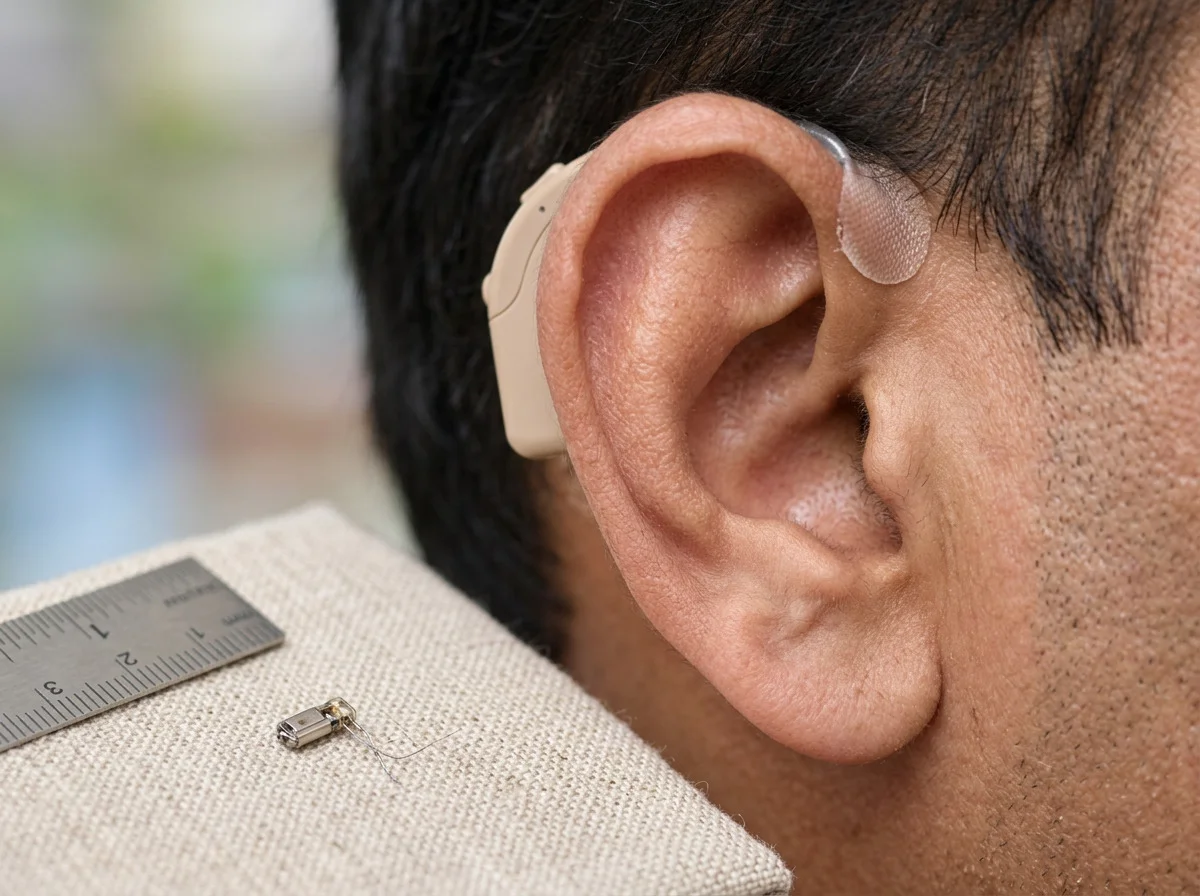
A middle-ear implant uses a small implanted part to make structures inside the ear vibrate. It may help selected people who cannot comfortably use, or get enough benefit from, an ordinary hearing aid.
ENT care in Bandra, MumbaiAbout Dr Adip Shetty
- Suitable for
- Specific patterns of hearing loss after detailed testing.
- How it works
- Mechanical vibration helps sound reach the inner ear.
- Ongoing care
- An outside processor and follow-up adjustments are usually needed.
Who might be considered?
An assessment checks the type of hearing loss, ear health and experience with conventional hearing aids. Repeated ear-canal irritation or difficulty wearing an ear mould may be relevant. Not every hearing loss can be helped by this device.
What the assessment includes
The team reviews hearing tests, speech understanding and hearing-aid fitting. Scans may show whether the ear anatomy suits an implant. Bone-conduction devices and other hearing options should also be discussed.
Surgery and recovery
The implanted part is attached to a suitable structure in the middle ear. After healing, the outside processor is fitted and adjusted. Wound checks, hearing tests and further programming help assess benefit.
Risks and practical considerations
Risks include infection, device failure, taste change, dizziness, worse hearing and rare facial weakness. Another operation may be needed. Ask about MRI restrictions, processor replacement, repairs and the cost of ongoing support before choosing a system.

A note on your care
“It is reasonable to ask why this particular implant is being considered for you. You should understand how it compares with the other ways of supporting your hearing.”
A little more clarity
Common questions
General answers, so you can arrive with a clearer sense of what to ask.
Is it a better version of a hearing aid?
It is a different option for selected ears. Many people are better served by well-fitted conventional hearing aids.
How is it different from a cochlear implant?
It moves structures that pass sound to the inner ear. A cochlear implant instead sends electrical signals to the hearing nerve.
Can I try the exact result before surgery?
A full trial of an implanted middle-ear device is not usually possible. The team uses hearing tests and device-specific assessment to estimate benefit.
Can I have an MRI afterwards?
It depends on the exact implant. Some devices restrict MRI scanning. Keep the implant identification card and tell the scanning team before any MRI.
Sources and review
Updated . General information to help you prepare for a consultation. Information on this website does not replace a consultation.
Clinically reviewed by Dr Adip Shetty on .
Read next
Pages that sit beside this treatment.