
TreatmentHearing implants
Cochlear implants
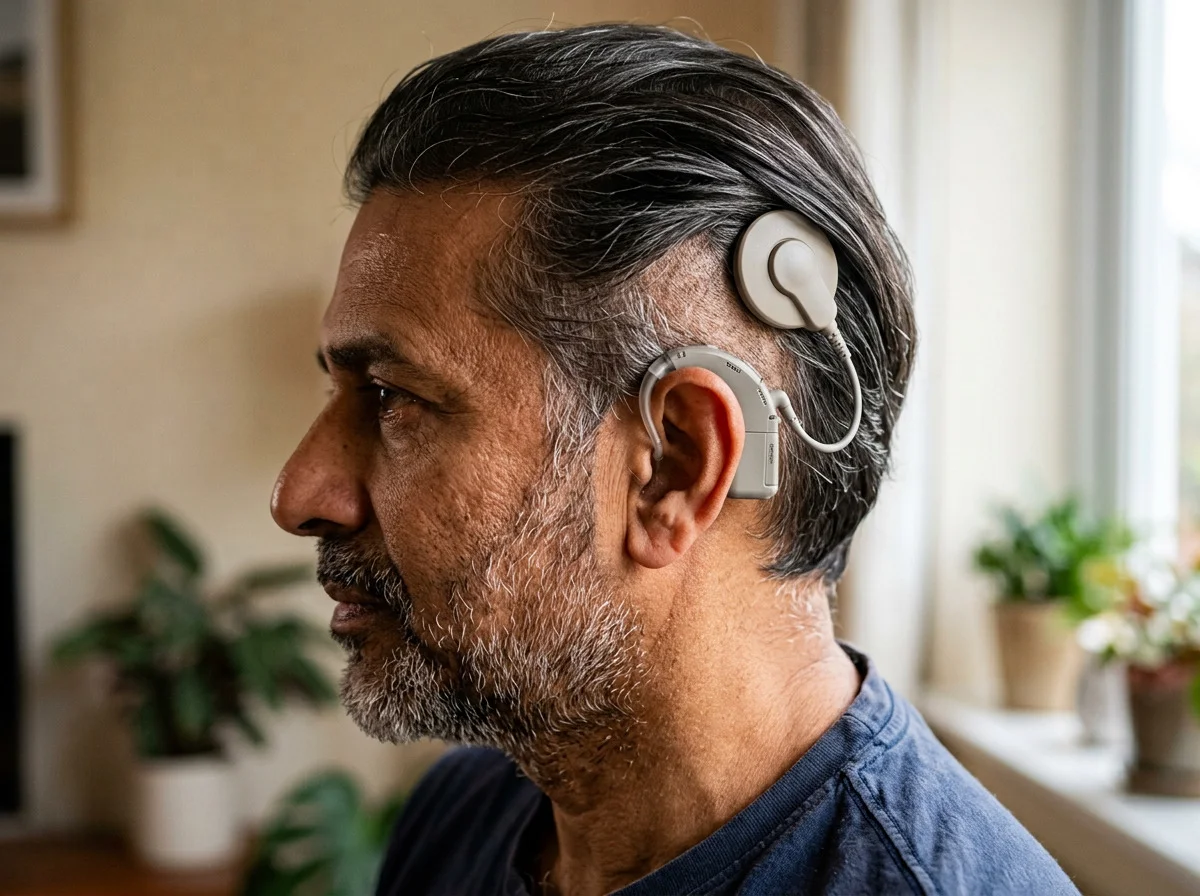
A cochlear implant can help some people who understand too little speech with hearing aids. It sends signals to the hearing nerve. An assessment checks likely benefit and the support needed after surgery.
ENT care in Bandra, MumbaiAbout Dr Adip Shetty
- Who it may help
- Selected adults and children with significant hearing loss.
- After surgery
- Switch-on happens after healing, followed by tuning visits.
- Commitment
- Regular use and listening practice are part of treatment.
How it differs from a hearing aid
A hearing aid makes sound louder. A cochlear implant uses an internal device and an outside sound processor to send electrical signals to the hearing nerve. It provides a different way of hearing, rather than restoring natural hearing.
What the assessment includes
- Hearing and speech tests, including how you hear with well-fitted hearing aids.
- Ear examination and scans when needed.
- A discussion of communication goals, general health and support at home.
- A plan for fitting, tuning and listening support after the operation.
From surgery to using the implant
Surgery places the internal part. After the wound heals, a hearing specialist (audiologist) switches on and adjusts the processor. Sound may feel unfamiliar at first. Progress depends on the person, their hearing history and ongoing practice.
Risks and longer-term care
Risks include infection, dizziness, taste change, loss of remaining hearing, device failure and rare facial-nerve injury. Meningitis is a rare serious risk; ask about recommended vaccinations before surgery. MRI precautions depend on the exact device. Future servicing, processor replacement and follow-up should be discussed.
Other ways to support hearing
Better hearing-aid fitting, assistive listening devices and communication support remain important options. The assessment should explain what each approach could offer you.

A note on your care
“The decision is about more than the operation. We should also talk about switching the implant on, learning to use the sound and the support you will have afterwards.”
A little more clarity
Common questions
General answers, so you can arrive with a clearer sense of what to ask.
Will I hear immediately after the operation?
Usually not through the implant. The outside processor is fitted and switched on after healing. The implant team will give you the timing.
Will an implant give me normal hearing?
No. It may improve access to speech and everyday sounds, but results vary. Listening practice and repeated adjustments help you make use of the new sound.
Can older adults be assessed?
Yes. Age alone does not decide suitability. Health, hearing tests, communication needs and the ability to take part in follow-up are considered.
What costs should I ask about?
Request a written estimate covering assessment, the device, hospital care, switch-on, tuning, listening support and future processor or accessory costs.
Sources and review
Updated . General information to help you prepare for a consultation. Information on this website does not replace a consultation.
Clinically reviewed by Dr Adip Shetty on .
Read next
Pages that sit beside this treatment.