
TreatmentEar and hearing
Cholesteatoma surgery
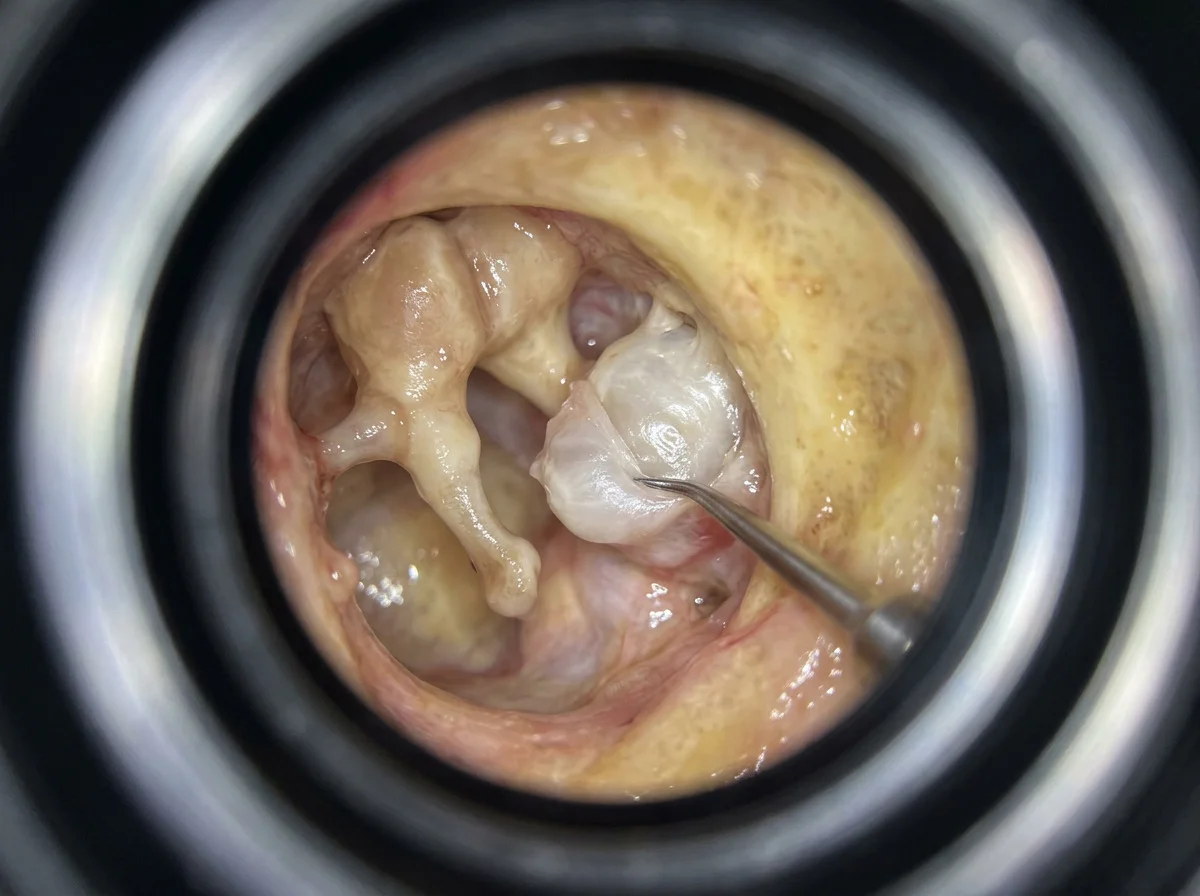
Cholesteatoma surgery removes trapped skin from the middle ear and, when needed, the bone behind it. The main aim is to control disease and prevent further damage. Hearing repair may be part of the same operation or a later one.
ENT care in Bandra, MumbaiAbout Dr Adip Shetty
- Main priority
- Remove disease and protect the ear.
- Hearing
- May improve, stay the same or worsen.
- Long-term care
- Regular checks are needed even when the ear feels well.
Planning the operation
An ear examination, hearing test and sometimes a scan show the extent of disease. The surgeon explains the approach, whether hearing repair is planned and whether a second operation may be needed. Drops can treat infection but cannot remove the trapped skin.
What surgery involves
The surgeon clears the affected middle ear and sometimes the mastoid, the bone behind the ear. The shape of the ear cavity may be changed to allow safe removal and follow-up. Some ears need ongoing cleaning afterwards.
Recovery and follow-up
Packing may make the ear feel blocked. Keep it dry and follow restrictions on lifting, swimming and flying. Recovery takes several weeks and varies with the operation. Later examinations, scans or a second procedure may check for returning disease.
Risks to discuss
Hearing loss, dizziness, taste change, infection and rare facial weakness are possible. Disease can remain or return even after careful surgery. Seek urgent assessment for new facial weakness, severe dizziness, worsening swelling, fever or a severe headache.

A note on your care
“Ask me to explain the plan for both the operation and the follow-up. Understanding why your ear needs further checks is an important part of being ready for surgery.”
A little more clarity
Common questions
General answers, so you can arrive with a clearer sense of what to ask.
Is one operation always enough?
No. A planned second operation or follow-up scan may be needed to check for remaining disease or reconstruct hearing.
Can I wait if the ear is not painful?
Pain does not show how far the disease has spread. Agree timing with the surgeon rather than delaying without a follow-up plan.
Will I need lifelong ear cleaning?
Some operations leave a cavity that needs regular cleaning. Others do not. Ask which approach is planned for your ear.
What happens if hearing remains reduced?
A hearing aid, later hearing-bone repair or another hearing option may be considered after the ear is safe and healed.
Sources and review
Updated . General information to help you prepare for a consultation. Information on this website does not replace a consultation.
Clinically reviewed by Dr Adip Shetty on .
Read next
Pages that sit beside this treatment.